


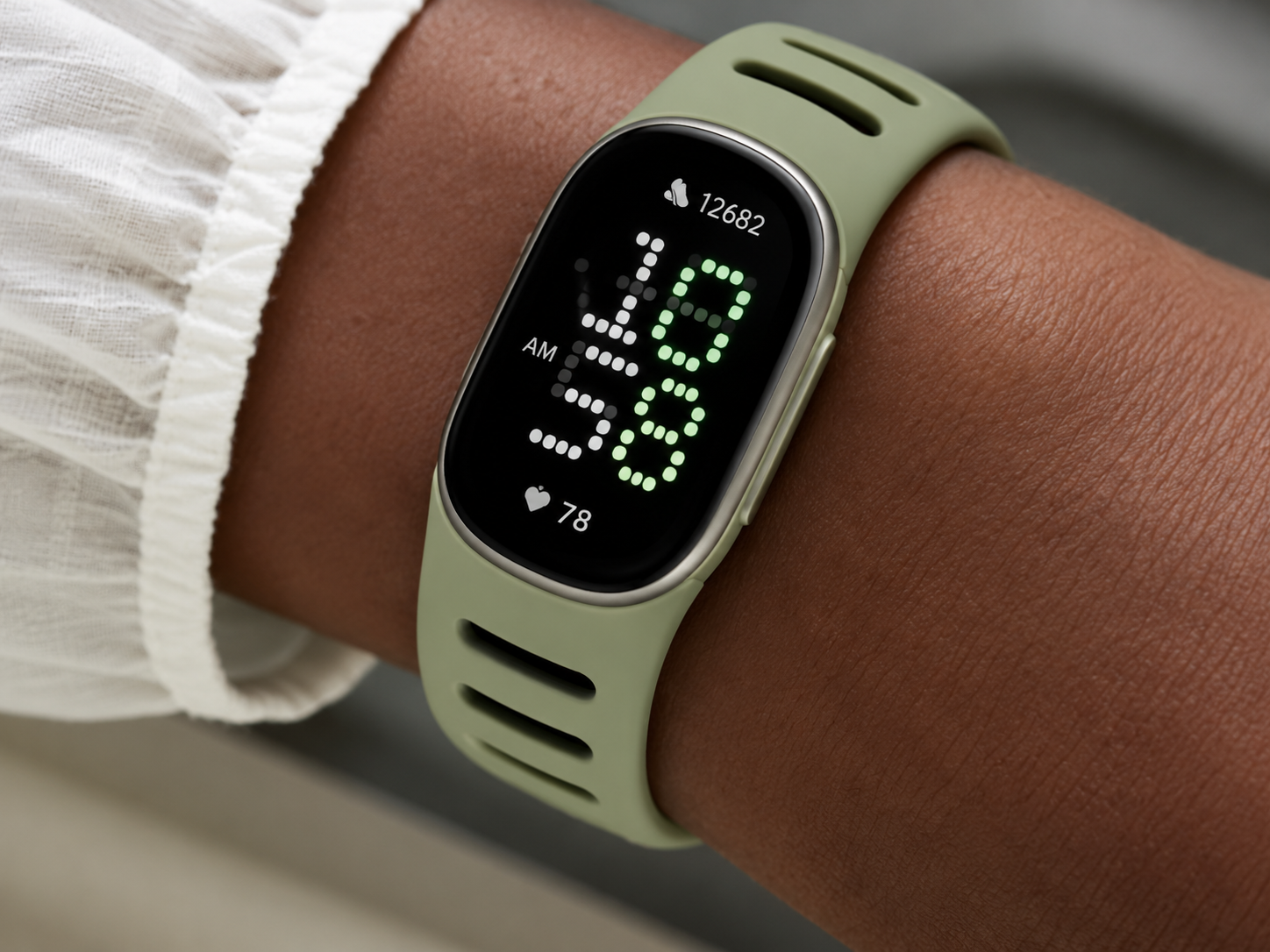
Google has launched its second Fitbit tracker of 2026. The Fitbit Edge arrived on October 12 at $180. It gives shoppers a middle option between the screenless Fitbit Air and the more advanced Pixel Watch. Along with the device, Google is pushing a bigger idea: wearables should spot changes in your health early and tell you what to do about them.
Meet the Fitbit Edge: Google’s Mid-Range Health Tracker
Google calls the Edge a slim tracker packed with advanced health and fitness tools, and it promises up to a week of battery life on one charge. That puts it in a useful spot for people who find the Air too basic and the Pixel Watch more than they need.
For many buyers, a tracker is a simpler choice than a smartwatch. The Edge keeps the focus on health data rather than apps and notifications, while still offering better sensing than Google’s entry model.
Built for Everyday Workouts and Quiet Health Monitoring
On the fitness side, the Edge detects workouts automatically, so you don’t have to start a session by hand. It also has an altimeter, which helps track elevation on hikes, climbs and stair-heavy routes.
The more distinctive part happens in the background. The Edge is designed to flag changes in blood pressure and insulin resistance trends without asking the wearer to do anything extra. These were once features you’d expect only on pricier devices, so seeing them at $180 stands out.
The AI Layer: Health Coach and Health Guardian
Hardware is only half the story. Google has spent 2026 building the software that gives the sensors meaning.
In May, the company launched the Google Health app alongside Health Coach, an AI assistant that acts as a fitness trainer, sleep coach and wellness advisor in one. The app replaced the Fitbit app and pulls in data from wearables, Health Connect, Apple Health and medical records.
In August came Health Guardian, a set of tools that watch for slow changes in your health over time. It tracks trends tied to insulin resistance, blood pressure and sleep breathing quality.
Both are available on the Edge, but only through a Google Health Premium subscription. Shoppers should budget for that ongoing cost on top of the purchase price.
How Google Spots Health Trends Without a Blood Draw
The insulin resistance feature looks at physiological data gathered over several weeks. From that, it estimates how efficiently your body uses energy and shows whether your trend is running high or low. No blood sample is involved.
The blood pressure feature rests on WavesFM, a foundation model trained on billions of minutes of heart and movement data.
These features show trends, not diagnoses. Think of them as early nudges that might prompt a conversation with your doctor, not as a replacement for clinical testing.
Flo, Abbott and More: Building a Connected Health Hub
Google is also widening the circle of apps and services that feed into its platform.
- Flo Health – A multi-year partnership will bring cycle, pregnancy and menopause guidance into the Google Health app and Coach. The two companies also plan joint research on underserved topics, which may include perimenopause, polyendocrine metabolic ovarian syndrome (PMOS), pregnancy and postpartum recovery. They also intend to build women-focused products that combine Flo’s algorithms with Google’s sensors.
- Abbott – U.S. users can link Abbott’s Lingo over-the-counter glucose monitor to see glucose alongside meals, workouts and sleep.
- MyFitnessPal – An expanded integration lets people bring in daily meal and nutrition logs.
- Function Health – U.S. users can import clinical lab results into the app.
The goal is clear: gather wearable data, nutrition, glucose and lab results in one place so the AI coach can give more personal advice.
From Step Counter to Health Platform
Google bought Fitbit in 2021 for $2.1 billion. Since then, the brand has moved well beyond counting steps. The Edge fits a strategy of connecting devices, personal health data and AI coaching into a single consumer health platform.
Some open questions remain. How reliable will the blood pressure and insulin resistance trends prove in daily life? How many people will pay for Premium? And how will Google protect such sensitive information as more records and partners join the app? These issues will likely decide how far the platform goes.
Should You Buy the Fitbit Edge?
If you want health insights beyond basic fitness tracking, but don’t need a full smartwatch, the Edge is worth a look. Its real value depends on the Premium subscription and the growing partner network, so weigh the total cost, not just the $180 sticker price.